
They Were Never Missing — They Were Dismissed
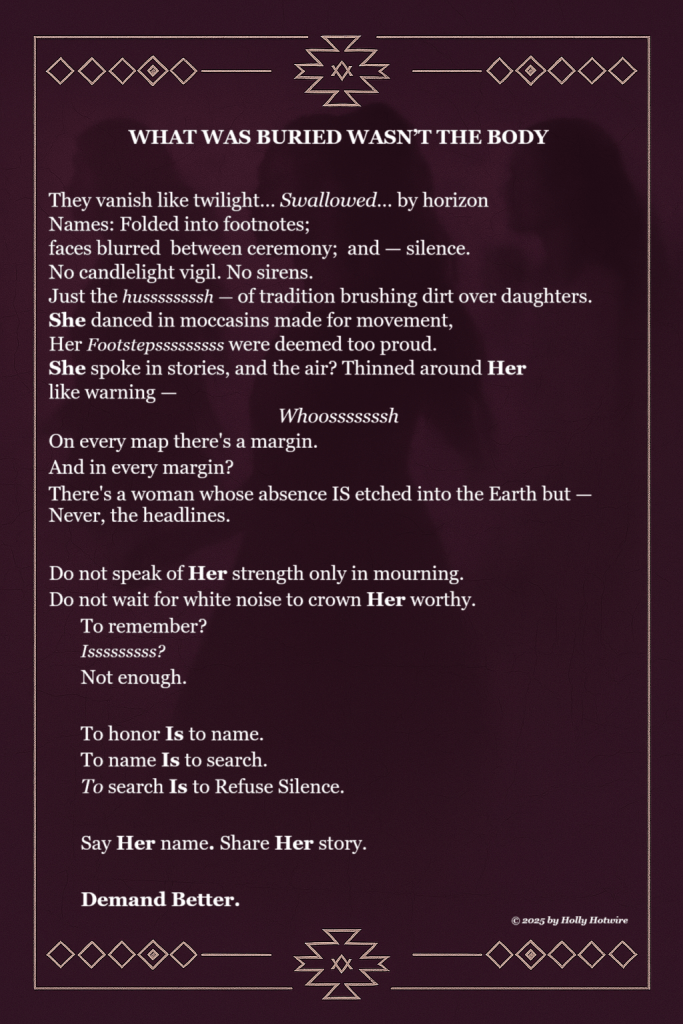
On July 16, 2025, lawmakers gathered in a House Appropriations Subcommittee hearing to confront what numbers cannot erase: The epidemic of Missing and Murdered Indigenous Women (MMIW) in the United States. C-SPAN’s coverage of this fiscal cycle revealed more than budget figures; it underscored how justice remains unfunded, undervalued, and often unspoken.
Missing. Murdered. Ignored. These women are not hashtags. Not statistics. And certainly not expendable.
The crisis of Missing and Murdered Indigenous Women is not a historical wound; it’s a present-tense emergency.
In early 2025, the brutal murder of Emily Pike, a 14-year-old citizen of the San Carlos Apache Tribe, reignited national outrage. She vanished from a group home in Mesa, Arizona, and her dismembered remains were discovered weeks later near Highway 60. Despite multiple leads, no arrests have been made.
Her death prompted candlelight vigils, red dress protests, and the passage of Emily’s Law in Arizona. This legislation was created to trigger alerts when Native Americans go missing. But laws alone don’t stop violence. They don’t erase the trauma. And they don’t guarantee justice.
Red Dresses and Landfills: When Justice Arrives Too Late
Just weeks later, the remains of Marcedes Myran, a victim of convicted serial killer Jeremy Skibicki, were recovered from a landfill in Manitoba. Myran was one of four Indigenous women targeted and murdered. Her murder was part of a case so horrific it was labeled a “genocide” by Canada’s national inquiry. Her family had begged authorities to search the landfill for months. The delay spoke volumes.
These are not isolated tragedies. They’re symptoms of a system that still fails to protect Indigenous women. And they demand more than sympathy; they demand sustained attention, accountability, and action.
Their stories, gut-wrenching and far too common, signal not random misfortune but a pattern entrenched in history and policy. Each name is a warning, each silence a red flag. And yet even as advocacy surges, the crisis continues beneath the radar.
Indigenous women are disappearing. They’re being murdered. And most people never hear their names.
The MMIW movement emerged to confront this silence. It’s not just about raising awareness; it’s about exposing the deliberate erasure built into law enforcement, media coverage, and federal policy.
Who Gets Noticed?
When non-Indigenous victims vanish, media mobilizes. News cycles churn. But for Indigenous women, cases often stall in silence. Consider Ashley Loring HeavyRunner, a young woman from the Blackfeet Nation in Montana, who went missing in 2017. Her family raised the alarm, organized search efforts, and spoke to major outlets. The case remains unsolved.
Then there’s Kaysera Stops Pretty Places, found dead in 2019 under suspicious circumstances in Hardin, Montana. No autopsy, no charges, and still no clear answers.
And Savanna LaFontaine-Greywind, a 22-year-old from Spirit Lake Nation, North Dakota, who was murdered while eight months pregnant. Her death sparked outrage and led to Savanna’s Act, designed to improve tracking and law enforcement response. It passed, but implementation? Patchy.
These names surfaced because their families never stopped fighting. Thousands more remain hidden behind institutional blind spots.
Why It Keeps Happening
The crisis isn’t just emotional. It’s structural.
Jurisdictional confusion across tribal, state, and federal lines delays response times and fractures accountability. The U.S. Department of Justice acknowledges this complexity, but resolution is slow and inconsistent.
A damning report by the Urban Indian Health Institute found that police departments often failed to document cases correctly, misclassified victims’ ethnicity, or refused to investigate altogether. More than 5,000 Indigenous women were reported missing in 2021 alone, yet only a fraction were logged in national databases.
This isn’t oversight. It’s systemic neglect.
To honor is to name.
To name is to search.
Justice Moves at Two Speeds
Grassroots advocacy moves fast. Indigenous women-led organizations like MMIW and the National Indigenous Women’s Resource Center mobilize around the clock: organizing vigils, pushing policy, and supporting families when officials fail.
Federal action limps behind. Savanna’s Act is on the books, but without robust funding and enforcement, it’s more symbol than solution. What’s needed is immediate support for tribal law enforcement, nationwide data standardization, and media accountability.
The imbalance is clear: families work every day to keep their loved ones’ names alive. Governments stall. Media flickers, then fades.
MMIW isn’t a trend. It’s a reckoning. Justice begins with visibility. Not only nationally, but in every household, every feed, every conversation.
Because the most dangerous thing isn’t violence. It’s silence.
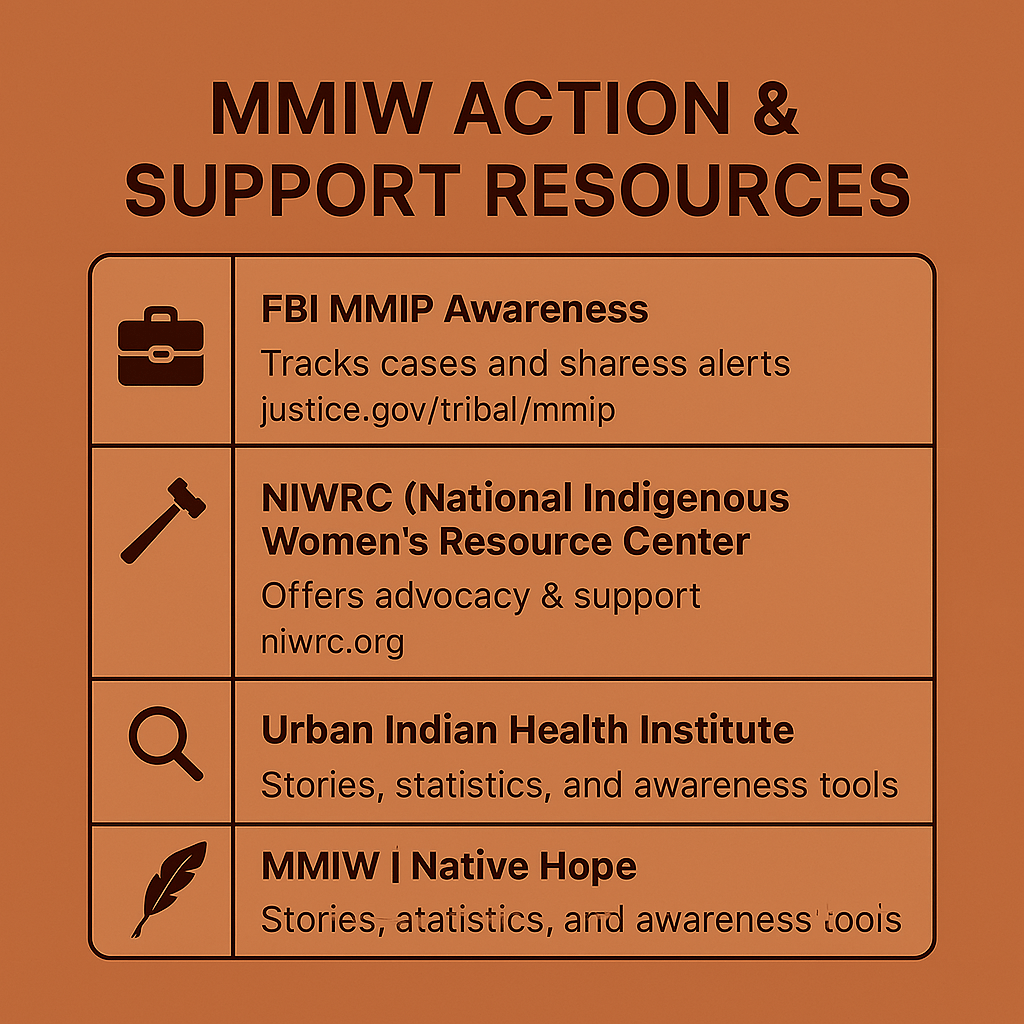
Refuse to Vanish. Refuse the Silence.
These women are not missing. They’re being missed. By families. By communities. By a system that looks away.
But you don’t have to.
Care like it’s personal. It is.
Get involved like justice depends on you. It might.
Report what you know. Even whispers help.
Keep searching. Search for names, for answers, for accountability.
Find truth. Refuse to bury it.
This isn’t a moment. It’s a movement. A refusal to forget. A demand to act.
No one gets buried in margins when the page is rewritten.
~ * ~ Holly out for now. ~ * ~
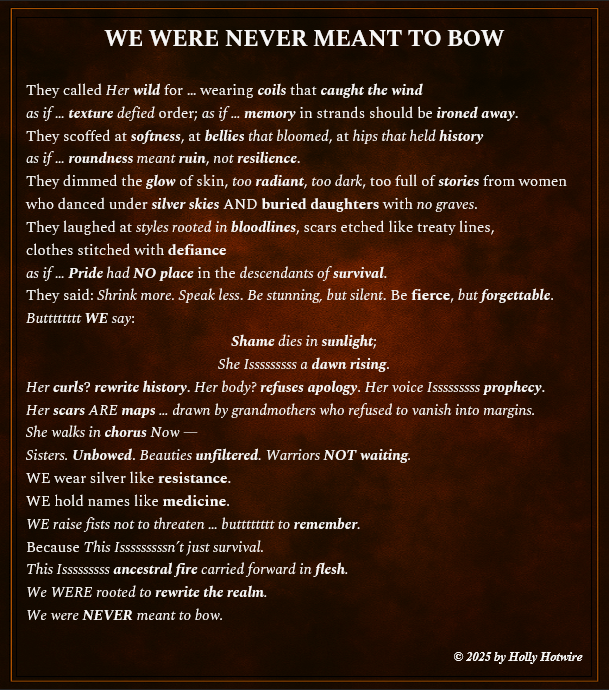
A declaration of defiance. A refusal to disappear. This is ritual, reclamation, and heresy braided into verse. #RefuseTheSilence #AncestralResilience #ErasedButUnbroken
 Hot & Not in Hollywood
Leave a comment