Hot & Not in Hollywood

Timestamped Pop Culture. No Fluff.

~*~ About ~*~

~*~ All Posts ~*~

  • They Were Never Missing — They Were Dismissed
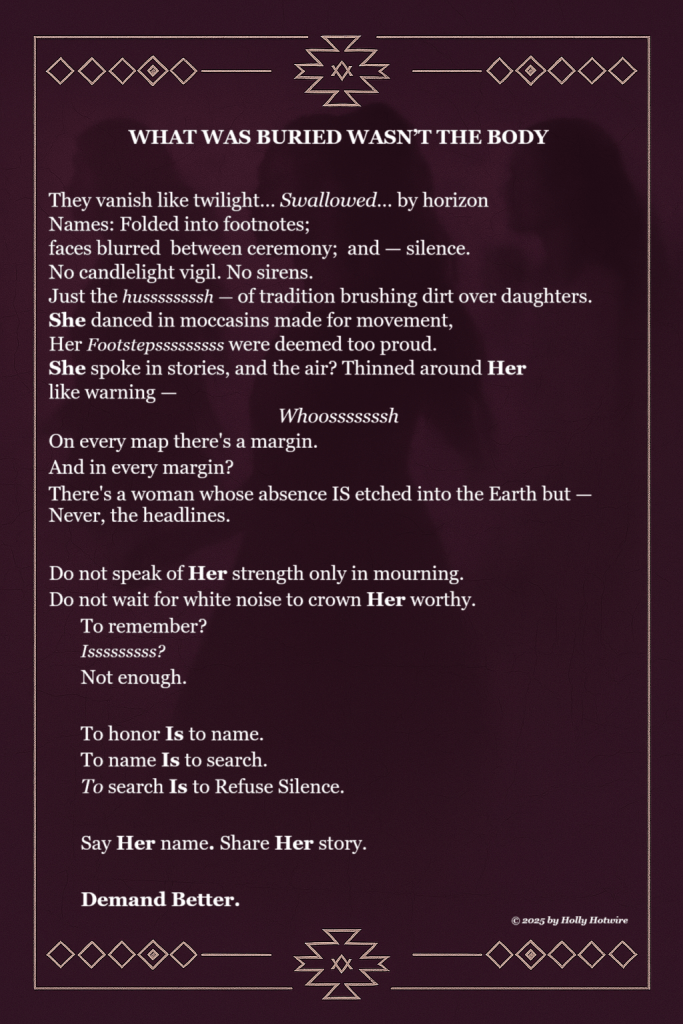
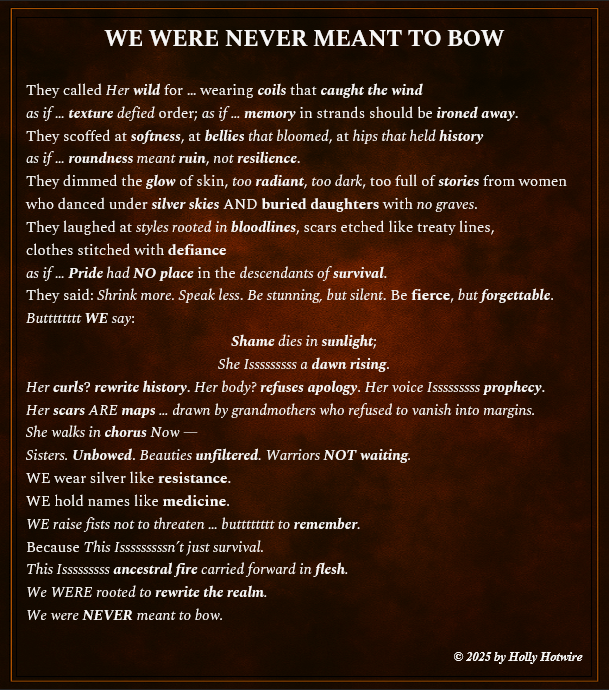
    Poem image honoring Missing and Murdered Indigenous Women (MMIW); spectral text overlays on somber background evoke erasure, ancestral resilience, and ritual protest. Verses speak of moccasins, margins, twilight disappearance, and refusal to silence.
    A poetic portrait of erased Indigenous women: a visual reflection on #MMIW injustice, ancestral silence, and the refusal to forget. This piece demands remembrance and action. #Erase #Resist #Remembrance

    On July 16, 2025, lawmakers gathered in a House Appropriations Subcommittee hearing to confront what numbers cannot erase: The epidemic of Missing and Murdered Indigenous Women (MMIW) in the United States. C-SPAN’s coverage of this fiscal cycle revealed more than budget figures; it underscored how justice remains unfunded, undervalued, and often unspoken.

    Missing. Murdered. Ignored. These women are not hashtags. Not statistics. And certainly not expendable.

    The crisis of Missing and Murdered Indigenous Women is not a historical wound; it’s a present-tense emergency.

    In early 2025, the brutal murder of Emily Pike, a 14-year-old citizen of the San Carlos Apache Tribe, reignited national outrage. She vanished from a group home in Mesa, Arizona, and her dismembered remains were discovered weeks later near Highway 60. Despite multiple leads, no arrests have been made.

    Her death prompted candlelight vigils, red dress protests, and the passage of Emily’s Law in Arizona. This legislation was created to trigger alerts when Native Americans go missing. But laws alone don’t stop violence. They don’t erase the trauma. And they don’t guarantee justice.

    Red Dresses and Landfills: When Justice Arrives Too Late

    Just weeks later, the remains of Marcedes Myran, a victim of convicted serial killer Jeremy Skibicki, were recovered from a landfill in Manitoba. Myran was one of four Indigenous women targeted and murdered. Her murder was part of a case so horrific it was labeled a “genocide” by Canada’s national inquiry. Her family had begged authorities to search the landfill for months. The delay spoke volumes.

    These are not isolated tragedies. They’re symptoms of a system that still fails to protect Indigenous women. And they demand more than sympathy; they demand sustained attention, accountability, and action.

    Melissa Shirley Casias went missing in Taos, New Mexico. Her story is one among countless others in the MMIW (Missing and Murdered Indigenous Women) crisis. This tweet reminds us: remembrance isn’t justice. Share her name. Demand answers. Uplift the stories that headlines ignore. #MMIW

    Their stories, gut-wrenching and far too common, signal not random misfortune but a pattern entrenched in history and policy. Each name is a warning, each silence a red flag. And yet even as advocacy surges, the crisis continues beneath the radar.

    Indigenous women are disappearing. They’re being murdered. And most people never hear their names.

    The MMIW movement emerged to confront this silence. It’s not just about raising awareness; it’s about exposing the deliberate erasure built into law enforcement, media coverage, and federal policy.

    Who Gets Noticed?

    When non-Indigenous victims vanish, media mobilizes. News cycles churn. But for Indigenous women, cases often stall in silence. Consider Ashley Loring HeavyRunner, a young woman from the Blackfeet Nation in Montana, who went missing in 2017. Her family raised the alarm, organized search efforts, and spoke to major outlets. The case remains unsolved.

    Then there’s Kaysera Stops Pretty Places, found dead in 2019 under suspicious circumstances in Hardin, Montana. No autopsy, no charges, and still no clear answers.

    And Savanna LaFontaine-Greywind, a 22-year-old from Spirit Lake Nation, North Dakota, who was murdered while eight months pregnant. Her death sparked outrage and led to Savanna’s Act, designed to improve tracking and law enforcement response. It passed, but implementation? Patchy.

    These names surfaced because their families never stopped fighting. Thousands more remain hidden behind institutional blind spots.

    Esmerelda “Kit” Mora vanished in Omak, Washington. Her name is etched into the MMIW crisis: a young Indigenous woman lost in silence, whose story echoes through communities still seeking justice. #Indigenous #Support

    Why It Keeps Happening

    The crisis isn’t just emotional. It’s structural.

    Jurisdictional confusion across tribal, state, and federal lines delays response times and fractures accountability. The U.S. Department of Justice acknowledges this complexity, but resolution is slow and inconsistent.

    A damning report by the Urban Indian Health Institute found that police departments often failed to document cases correctly, misclassified victims’ ethnicity, or refused to investigate altogether. More than 5,000 Indigenous women were reported missing in 2021 alone, yet only a fraction were logged in national databases.

    This isn’t oversight. It’s systemic neglect.

    Justice Moves at Two Speeds

    Grassroots advocacy moves fast. Indigenous women-led organizations like MMIW and the National Indigenous Women’s Resource Center mobilize around the clock: organizing vigils, pushing policy, and supporting families when officials fail.

    Federal action limps behind. Savanna’s Act is on the books, but without robust funding and enforcement, it’s more symbol than solution. What’s needed is immediate support for tribal law enforcement, nationwide data standardization, and media accountability.

    The imbalance is clear: families work every day to keep their loved ones’ names alive. Governments stall. Media flickers, then fades.

    MMIW isn’t a trend. It’s a reckoning. Justice begins with visibility. Not only nationally, but in every household, every feed, every conversation.

    Because the most dangerous thing isn’t violence. It’s silence.

    FBI MMIP Initiative * NIWRC * Urban Indian Health Institute * MMIW

    Refuse to Vanish. Refuse the Silence.

    These women are not missing. They’re being missed. By families. By communities. By a system that looks away.

    But you don’t have to.

    Care like it’s personal. It is.

    Get involved like justice depends on you. It might.

    Report what you know. Even whispers help.

    Keep searching. Search for names, for answers, for accountability.

    Find truth. Refuse to bury it.

    This isn’t a moment. It’s a movement. A refusal to forget. A demand to act.

    No one gets buried in margins when the page is rewritten.

    Savanna Standing Bear disappeared from Parmelee, South Dakota. #SavannaStandingBear #MissingIndigenousWomen #Justice

    ~ * ~ Holly out for now. ~ * ~

    Poetic tribute to Indigenous resilience and erasure; spectral verses move through moccasins, margins, and mourning with ancestral defiance. Typography and spacing evoke ritual cadence and refusal to vanish. 

Featured in Hot & Not in Hollywood’s cultural series.

    A declaration of defiance. A refusal to disappear. This is ritual, reclamation, and heresy braided into verse. #RefuseTheSilence #AncestralResilience #ErasedButUnbroken
  • This week, the entertainment industry was shaken to its core by the tragic deaths of American Idol music supervisor Robin Kaye and her husband, musician Thomas Deluca. The artistic pair’s lives ended in violence at their Encino home.

    Robin Kaye, American Idol‘s longtime music supervisor, and her husband Thomas Deluca were found dead by LAPD in a suspected double homicide. Their tragic deaths mark the loss of two creative forces in the entertainment world. #RobinKate #Encino #DoubleHomicide

    Kaye wasn’t just a music supervisor. From 2002 to 2023, she was the unseen heartbeat of Idol, sculpting the soundscapes that helped launch countless musical careers.

    Her gift wasn’t flashy; it was foundational. With decades of experience that included licensing work for MCA-Universal and PolyGram, and founding SyncroniCity in 2000 to represent icons like Andrea Bocelli, she built a quiet empire of influence.

    Deluca, her partner in art and life, brought a gritty soulfulness to his songwriting, recently releasing the album Street Rock in 2022.

    Unfolding Tragedy and New Developments

    It began with heartbreak. On Monday, police responded to a wellness check at the couple’s residence on White Oak Avenue and found both Kaye and Deluca dead from apparent gunshot wounds. Their deaths, now classified as a double homicide, ignited shockwaves of sorrow throughout Hollywood and beyond.

    A statement from American Idol captured the sentiment:


    Then, late Tuesday, a critical turn: an arrest was made in connection with the shooting. While details remain limited and the suspect has not been publicly identified, the Los Angeles Police Department confirmed the development as the investigation deepens.

    The news adds a layer of urgency to the mourning—a glimmer of justice in an otherwise grim narrative.

    A Legacy Worth More Than a Headline

    Robin Kaye didn’t court attention, but her work demanded it. She was an emotional architect, orchestrating every musical swell that elevated performance into poetry. Her loss invites us to consider how many visionaries shape the world from backstage—unseen, uncelebrated, yet utterly indispensable.

    Her passing—and the tragic circumstances around it—deserve more than shock. They deserve understanding, remembrance, and tribute. Because when voices like hers fall silent, it’s up to us to carry the melody forward.

    ~ * ~ Holly out for now. ~ * ~

    Support Hot & Not in Hollywood

    Keep the satire sharp, the homepage clean, and the boutique delightfully offbeat. Choose your own amount.

    Buy Me Ice Mocha →
  • Spotlight spills across silver linen as screens pulse with the year’s most unforgettable moments. It’s not just celebration—it’s transformation, where storytelling meets silence, and a single name redraws the map of prestige. #EmmyNomination

    The 2025 Emmy nominations don’t just celebrate standout shows; they spotlight what the industry truly values right now: a genre remix. From Severance’s record-setting nods to bold picks like The Studio and Adolescence, this post decodes the stories reshaping Hollywood’s definition of prestige.


    The 77th Primetime Emmy nominations just dropped, and if you’re still catching your breath from last year’s Shōgun sweep, buckle up. This year’s lineup is a mood board for the industry’s identity crisis. Prestige dramas are playing musical chairs and comedy is having a midlife crisis. And, Reality TV? Well, it’s quietly becoming the most honest genre on screen.

    Drama: The Return of the Emotionally Repressed

    Severance leads the pack with 27 nominations, earned 27 Emmy nominations, showing that stories about harsh work lives and controlling companies are still a favorite on TV. But the real twist is that The White Lotus is back, and it’s bringing Parker Posey, Leslie Bibb, and Carrie Coon into the mix like a chaotic brunch you can’t look away from. Meanwhile, Slow Horses and The Last of Us are holding steady, but Shōgun, which was last year’s heavyweight, is nowhere to be found. A snub or a strategic retreat?

    Tramell Tillman scores his first Emmy nod for “Severance,” and Milchick’s dance finally gets its due. #EmmyDebut #Severance2025 #MilchickMoves

    Comedy: The Studio vs. The Bear vs. Hacks—Who’s the Real Alpha?

    Seth Rogen’s The Studio is the new disruptor, skewering Hollywood with the kind of satire that makes insiders squirm and viewers cheer. But The Bear and Hacks aren’t giving up their crowns without a fight. Jean Smart’s reign continues, and Liza Colón-Zayas is quietly becoming the MVP of ensemble acting. Abbott Elementary and Only Murders in the Building round out the category, proving that network TV still has teeth.

    Limited Series: Adolescence and The Pitt Are the New Prestige

    Forget the usual suspects. Netflix’s one-take thriller Adolescence and HBO Max’s breakout The Pitt are redefining what “limited” means. These aren’t just shows; they’re cinematic gut punches. And while Succession is gone, Jesse Armstrong’s HBO film Mountainhead is here to remind us that prestige never dies; it just changes format.

    “Severance” racks up 27 Emmy nods this season—Apple TV+’s dystopian drama just redefined domination. #SeveranceSweep #Emmys2025 #Hollywood

    Snubs & Surprises: Where’s the Love?

    Squid Game Season 2? Completely shut out. A bold move or a quiet acknowledgment that lightning rarely strikes twice.

    La Máquina, Hulu’s weirdly brilliant boxing conspiracy series, got ghosted. Emmy voters, blink twice if you’re okay.

    Pachinko continues to be the most beautiful show no one votes for. Apple TV+, maybe spend less on billboards and more on reminding people it exists?

    Talk & Reality: The Real Real

    The Daily Show, Jimmy Kimmel Live, and Stephen Colbert are the only talk shows nominated. That’s not a shortlist; it’s a cry for reinvention. Meanwhile, The Traitors is back to defend its crown in reality competition, joined by RuPaul’s Drag Race, Survivor, and Top Chef. But the real tea? A Housewives-style Mormon docusoap from Hulu just got nominated. Reality TV is no longer guilty pleasure; it’s cultural commentary.

    Emmy Vibes

    Here’s a quick visual breakdown of the Emmy energy this year:

    CategoryVibe ShiftDominant Mood
    DramaPrestige with paranoiaExistential dread
    ComedySatire meets sincerityControlled chaos
    Limited SeriesCinematic and riskyEmotional intensity
    Reality/TalkUnfiltered and evolvingAuthentic disruption

    Final Take: The Emmys Are a Mirror… And Hollywood’s Checking Its Reflection

    What this year’s nominations reveal isn’t just which series resonated; it’s how television is redefining what cultural relevance means on-screen. Prestige is no longer tied to period wigs or grayscale melancholia; it’s fluid, genre-bending, and unapologetically personal. Whether it’s Severance dissecting corporate dread, The Studio poking through Hollywood’s facade, or Adolescence giving chaos its own crown, the message is clear: storytelling that dares, lands.

    And if that’s the new bar for excellence? Hollywood better keep it up.

    ~ * ~ Stay tuned, stay savage, stay sparkly — Holly out. ~ * ~

    Support Hot & Not in Hollywood

    Keep the satire sharp, the homepage clean, and the boutique delightfully offbeat. Choose your own amount.

    Buy Me Ice Mocha →
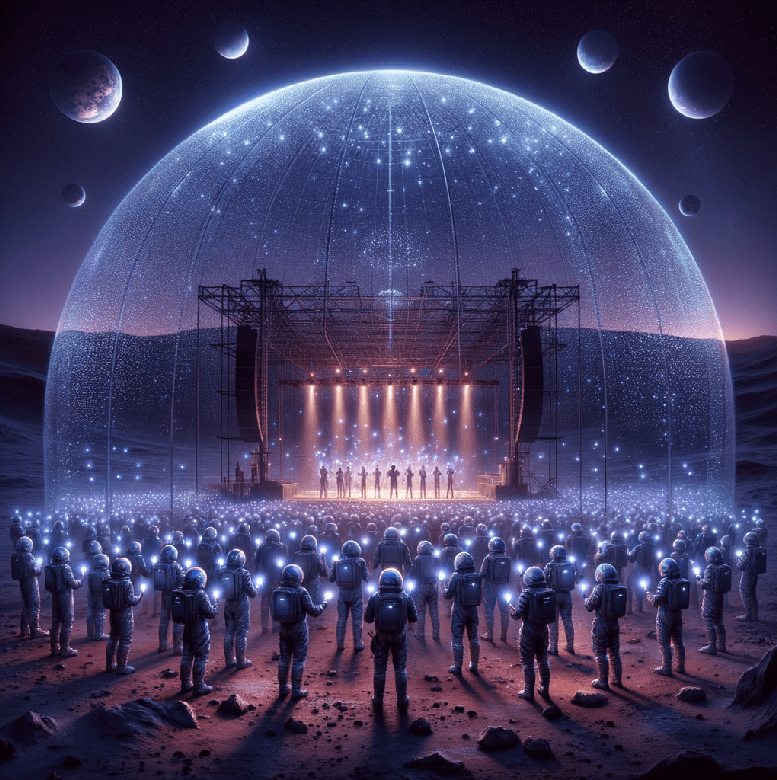
  • Rumors swirl around Taylor Swift’s concert on Mars, pairing pop stardom with SpaceX’s interplanetary ambitions. #Swift #Concerts #RedPlanet

    Taylor Swift is not launching into space, but her sound might. She is reportedly teaming up with SpaceX for Red Planet Sessions, where music meets Martian possibility. The concert’s not real (yet), but the impact is already happening...

    In a move that’s already sparking headlines across tech and entertainment media, Taylor Swift is said to be set to perform the first concert on Mars. This event is a collaboration with Elon Musk’s SpaceX that blends pop stardom with interplanetary ambition. The production, titled Red Planet Sessions, is expected to align with SpaceX’s upcoming crewed Starship launch, a mission Musk described as “life insurance for life collectively” during his May 2025 Starbase address.

    With Swift rumored to be recording a zero-gravity concept album and Musk’s colonization timeline gaining traction, a reported by Times of India’s coverage, this moment marks more than a music milestone. It’s the convergence of art, spaceflight, and emotional futurism: a seismic shift in how we define reach, resonance, and relevance.

    Zero Gravity, Full Emotion: Swift’s Cosmic Soundtrack

    Swift’s reported concept album, recorded in simulated zero gravity aboard a SpaceX capsule, explores a soundscape shaped by emotional isolation, cosmic rebirth, and planetary longing. It’s the kind of sound that doesn’t just drift; it floats, unsteady and beautiful, like trying to find balance in a place where gravity won’t cooperate.

    Tweet noting Taylor Swift as the only artist with two albums chosen for NASA’s Lunar Codex time capsule, celebrating her cultural legacy in space. #Swift #Legacy #Space

    Rather than functioning as a standard musical release, the project unfolds as immersive storytelling, where melody and texture blend into emotional terrain. It’s less about performance and more about presence, with an atmosphere sculpted to feel not only heard, but inhabited.

    NASA engineers are reportedly assisting with acoustic calibration to mimic Martian conditions. The sound design aims to preserve warmth and clarity despite the thin atmosphere, turning technical constraint into creative opportunity — proof that even on a distant world, resonance can still feel human.

    This artistic endeavor aligns with a larger ambition. As Musk reaffirmed in his Starship launch video, each mission brings us closer to a self-sustaining civilization.


    Stagecraft at the Edge of Civilization

    The concert dome, designed by SpaceX engineers with input from NASA’s Jet Propulsion Lab, will be pressurized to simulate Earth-like acoustics. The structure will be solar-powered, dust-shielded, and outfitted with holographic projection systems. Expect cobalt strobes over Martian soil, violet reflections against the dome’s curvature, and a silver pressure suit that pulses in sync with Swift’s opening chords.

    According to USA TODAY, the ninth Starship test flight marked a turning point in Mars readiness. Swift’s performance is timed to ride that wave.

    Parody tweet comparing a Taylor Swift concert to a hypothetical Trump-Musk rally at SpaceX, highlighting public fascination with celebrity and tech culture crossover. #Swift #SpaceX #ElonMusk

    When Music Leaves Earth, It Echoes Everywhere

    This is more than a concert; it’s a reminder that art follows us wherever we go. Red Planet Sessions pairs big emotion with smart design, created to resonate in a place that’s never heard music before. There’s no applause, just held breath. No encore, just memories made in orbit. It’s a moment not built on spectacle but on connection, leaving behind more than footprints and leaving something felt.

    Tweet announcing Taylor Swift as the first solo artist in Spotify history to have 17 songs surpass 1 billion streams, marking a historic achievement in global music streaming. #Swift #Spotify #Milestone

    With Swift’s storytelling shaping atmosphere and Musk’s machinery bending gravity, the performance potentially marks a fusion point: the moment where sonic resonance and planetary ambition converge. If successful, it won’t just mark a milestone in entertainment history; it could lay the emotional groundwork for future civilization. Art, here, isn’t an accessory. It’s architecture.


    Join the Countdown

    Want to be part of the conversation before liftoff? Drop your predictions, remix your favorite Swift tracks with Martian vibes, or design your own interstellar concert look. Tag your posts with #SwiftOnMars and let’s make history, one beat at a time.

    She won’t leave behind footprints. Not yet. But the echoes of her sound — imagined in zero gravity, calibrated for silence, crafted for connection — might reverberate farther than we thought. This isn’t a spectacle. It’s a glimpse of how art, even in orbit, still finds a way to land.

    ~ * ~ Stay tuned, stay savage, stay sparkly — Holly out. ~ * ~

    Support Hot & Not in Hollywood

    Keep the satire sharp, the homepage clean, and the boutique delightfully offbeat. Choose your own amount.

    Buy Me Ice Mocha →
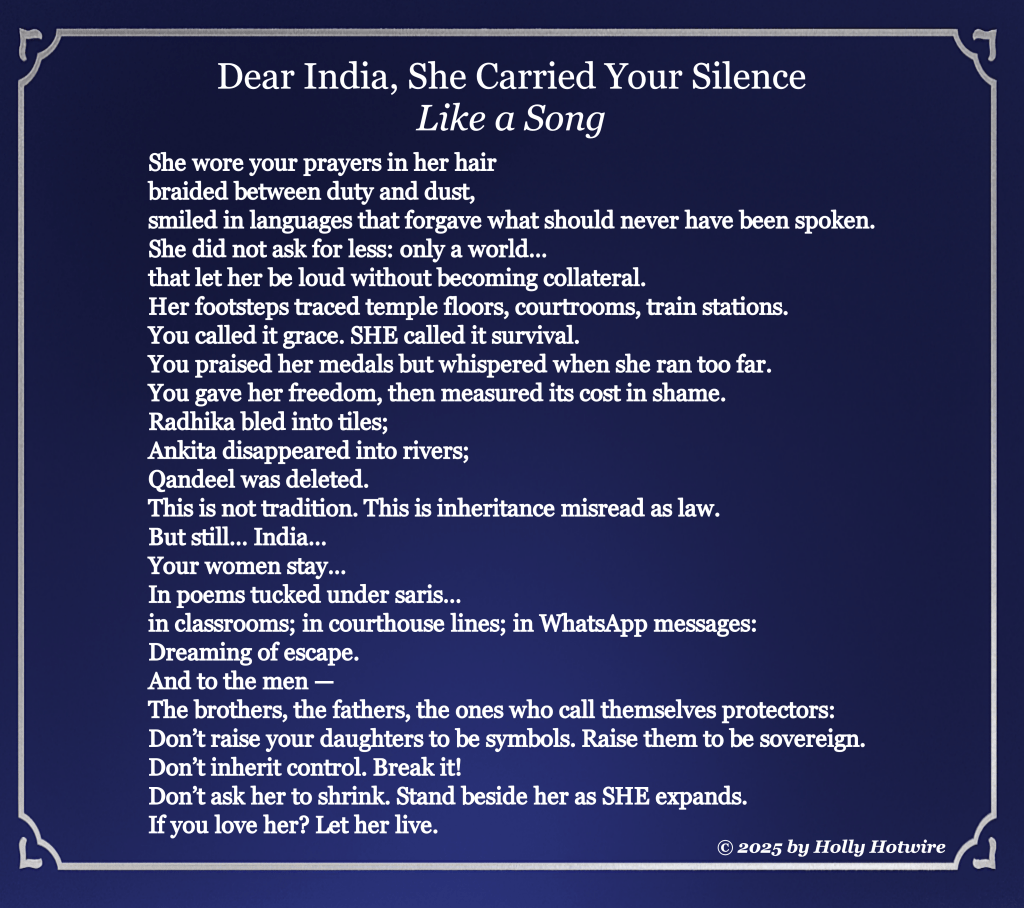
  • “If you love her? Let her live.” A closing plea from Holly Hotwire’s poem on generational silence, inherited control, and the women, like Radhika Yadav, who refuse to vanish. #RadhikaRemains #India #Tennis

    Success Made Radhika Yadav Free. Obedience Would’ve Kept Her Alive.

    Radhika Yadav rewrote what self-reliance looked like in a house built on old rules. As her ranking climbed and her coaching roster grew, the silence at home grew louder. The trigger wasn’t her success; it was her refusal to apologize for it.

    By the time her father stepped into the kitchen with a pistol, their dynamic had already collapsed under the weight of unspoken resentment and public shame. This was a reckoning inside four walls that couldn’t contain what she’d become.

    The aftermath wasn’t quiet. News anchors flashed her face across prime time, narrating a tragedy too brutal to soften. But behind the headlines, the story metastasized into something murkier: family honor, gendered resentment, and the cost of female ambition.


    Her name lit up Reddit threads dissecting her choices, and Twitter timelines debated whether ambition had a cost. The digital reaction wasn’t grief; it was guilt refracted through screens.

    Much like Ankita Bhandari before her, the violence was framed as a one-off act. But every detail exposed a pattern: of fathers shattered by daughters who refused shame as inheritance.

    The police called it a “domestic dispute.” The country called it a heartbreak. But those closest knew better: It was retaliation.

    When Grief Becomes a Mirror

    The headlines faded, but the discomfort lingered. Radhika’s story did not dissolve; it haunted and it echoed. In homes where daughters are praised but policed, her death became a cautionary tale, whispered through the hush of closed-door conversations.

    Her WhatsApp messages to her coach revealed a longing for escape, not rebellion: “Wanna enjoy life, idhar kaafi restrictions hai,” she wrote She was a young woman longing to study abroad, to live independently for a while. Not forever. Just for herself. NDTV later reported those aspirations in coverage of her case.

    She wasn’t asking for permission. She was asking for space to breathe. That was the last thing she was allowed to want.

    But independence, in her father’s eyes, wasn’t growth. It was defiance. And in communities where obedience is rewarded and silence is expected, longing becomes a threat. Her dreams didn’t collapse; they were confronted with violence.

    The backlash was cultural. Much like the case of Ankita Bhandari, whose murder was framed as a one-off act despite systemic patterns, Radhika’s tragedy exposed how female autonomy still threatens fragile masculinity.

    Her father’s confession deepened the rupture. Reportedly influenced by acquaintances who mocked his dependence on her earnings, he told police his pride had been “hurt beyond repair,” as reported by Hindustan Times.

    The Myth of the Good Father

    In the days after Radhika’s funeral, the narrative began to shift. Neighbors described her father as “quiet,” “respectable,” even “loving.” News segments replayed old footage of him cheering from the sidelines at her matches, as if proximity to pride could absolve violence. But the truth was simpler and more brutal: he didn’t snap. He simmered.

    According to police reports, Deepak Yadav had been stewing over perceived humiliation for weeks, triggered by taunts from relatives who mocked his dependence on her income (Economic Times). His confession was a blueprint of entitlement.

    Much like the case of Ankita Bhandari, whose murder was initially framed as a tragic anomaly, Radhika’s death revealed a deeper rot: the myth of the good father who simply “lost control.” But control was never the issue; it was ownership. In homes where daughters are raised to shine but not outshine, love often comes with conditions. And when those conditions are defied, the fallout isn’t just emotional—it’s fatal. Radhika didn’t die because she failed to meet expectations. She died because she exceeded them.

    💔 Cultural Beliefs That Killed 💔

    VictimRelation to MurdererYearCultural Belief That Led to DeathSource
    Radhika YadavFather2025Female success without apology is defiance; daughters must not outshine male authorityIndiaTV
    Ankita BhandariEmployer (political ties)2022Women’s autonomy threatens male reputation; silence is preferred over scandalWikipedia
    Shafilea AhmedParents2003Westernization equals dishonor; daughters must obey cultural norms regardless of geographyThe Desi Condition
    Qandeel BalochBrother2016Public female expression is shameful; family honor rests on women’s modestyGlobal Citizen
    Davalbi TambadFather & brothers2021Interfaith love is betrayal; daughters must marry within religion to preserve family purityThe Desi Condition
    Celine DookhranUncle2017Romantic autonomy is forbidden; women must conform to arranged marriage expectationsIndependent UK

    When Culture Wears a Mask of Care

    Radhika’s death didn’t occur in isolation. It played out a script familiar to women across communities where silence is expected and obedience is romanticized.

    Her father’s simmering resentment wasn’t just personal; it was fueled by cultural messaging that sees daughters not as individuals, but as honor-bearing assets.

    Like Qandeel Baloch, whose digital self-expression was deemed a threat to family reputation, Radhika also stepped into a spotlight she wasn’t meant to own. Not with rebellion. But with dreams. With choices. And sometimes, that’s all it takes to trigger rupture.

    The crime wasn’t born in a moment. It grew quietly in rooms where ambition is flattered until it threatens inherited control.

    When Boundaries Become Betrayal

    Even for families who’ve left their homeland, the belief persists: that conformity is care and tradition is protection. Displacement may shift geography, but inherited expectations remain intact — often disguised as love.

    Shafilea Ahmed’s parents masked coercion with concern. Their punishment for rejecting a forced marriage wasn’t just personal; it was cultural. Her story echoed across generations, unsettling those taught that silence is survival.

    Celine Dookhran, whose uncle murdered her for defying marital expectations. These weren’t spontaneous eruptions of violence. They were culminations of belief systems that treat female autonomy as erosion, not evolution. And until that lens is broken, every success story risks ending as a cautionary tale.

    Where Permission Ends, Possession Begins

    A girl’s ambition doesn’t rupture tradition. It exposes who tradition protects. In too many households, it quietly unsettles what tradition was built to preserve. In homes where daughters are adored but monitored, independence is welcomed only when it remains admired from a distance, silenced when it starts to speak for itself.


    We cannot archive these stories as anomalies. To do so erases the map of how it happens. Not of the girls, but of the systems that silence them — threaded through caste, class, diaspora, and generation. Until autonomy is seen not as betrayal, but as birthright, every choice she makes will be measured against the comfort it disrupts. And every father who feels “hurt beyond repair” will be protected by the culture that taught him to feel that way.

    ~ * ~ Holly out for now. ~ * ~

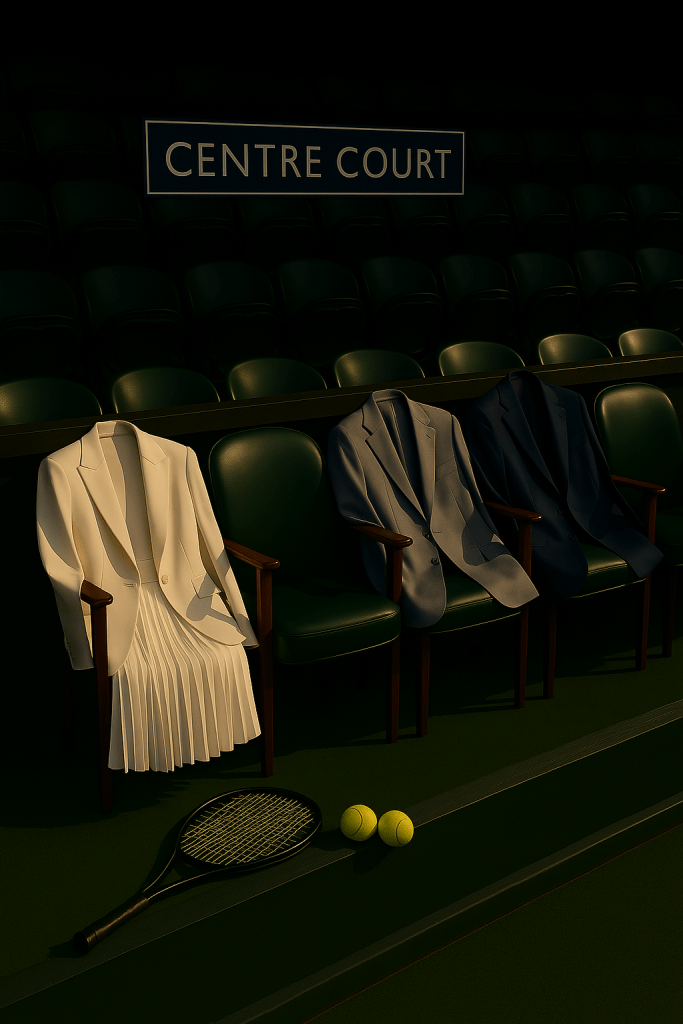
  • A cinematic view of Wimbledon’s Centre Court, styled in high-fashion tones and architectural balance to reflect the intersection of sport, visibility, and luxury. #CentreCourtElegance #FashionInMotion #HotnHollywood

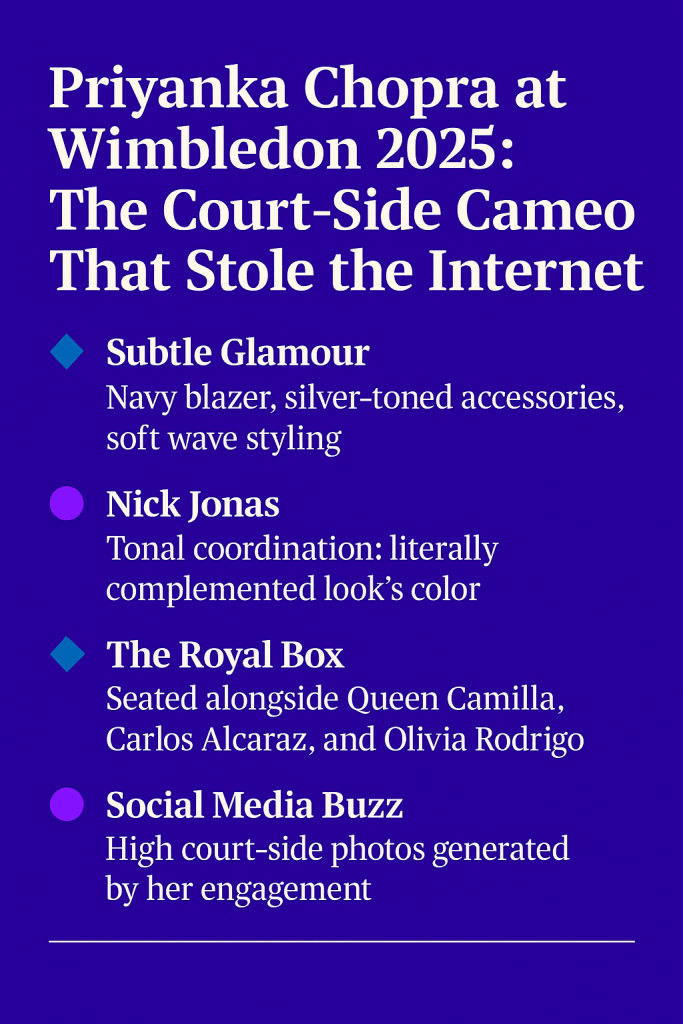
    Priyanka Chopra didn’t just arrive; she landed in the Royal Box with a look that knew exactly how far it would travel. She turned a Wimbledon sighting into a moment that felt destined for replay: refined, cinematic, and impossible to scroll past. Let’s unpack how her Royal Box presence became Wimbledon’s most screenshot-worthy highlight, bridging fandom, fashion, and global gaze.

    Why Priyanka Chopra’s Royal Box Moment Became a Fan-Fueled Fashion Fantasy

    Few celebrities can stir global conversation without saying a word. Priyanka Chopra didn’t have to speak; her presence said it all. Her Wimbledon 2025 appearance sparked the kind of online adoration usually reserved for tour debuts or Met Gala drama. Her look ignited a wave of edits and reels, each one casting her as living proof that elegance still trends.

    For many Desi viewers, Chopra’s presence in the Royal Box was more than glamorous—it was validating. Appearing with composed elegance among crowned heads and screen icons, she embodied a visibility long overdue.

    👑 Royal Box Style Clash: Wimbledon 2025 Edition 👑

    🟦 Celebrity🟪 Style Vibe⚪️ Color Palette🟦 Impact Rating🟪 Commentary
    Priyanka ChopraQuiet luxury, global glamNavy, silver★★★★★The definition of court-side poise
    Olivia RodrigoPlayful prep, Y2K nodsLavender, white★★★★☆A pop princess with posh credentials
    Hugh GrantBritish tweed traditionalistEarth tones, slate grey★★★Classic, but faded into the benches
    Queen CamillaRegal reserveMauve, pearl★★★★Dutifully royal with understated flourish
    Nick JonasPolished partner opticsGrey, navy★★★★☆Accessorizing the Chopra brand just right
    Alexa ChungIndie It-girl chicOlive, copper★★★☆A vintage remix that didn’t quite land
    Discover more Wimbledon fashion ~ quiet luxury, Centre Court style, and runway-ready looks @ W Magazine’s Wimbledon 2025 recap.

    Chopra moves through Hollywood, Bollywood, and everything in between. Her presence just fits, wherever cultural conversation happens.

    No official recap had dropped yet—but the internet already knew it had a moment on its hands. Her fans are everywhere. They shape edits, trade screenshots, and show up on glam blogs, Desi TikTok, and Twitter threads that turn one outfit into a week-long obsession. That devotion surfaced in real time.

    Hours after her appearance, fan edits flooded timelines, meme reactions spread like inside jokes, and fashion accounts treated her Wimbledon look like it belonged on a couture runway. Wimbledon didn’t ask for a moment this viral. Chopra gave it anyway.

    The Look That Launched a Thousand Reels

    This wasn’t an awards show. It wasn’t a film premiere. Still, Priyanka Chopra’s Wimbledon moment drew the same level of media heat. The response was immediate and electric. Surprise played its part. So did spectacle. And beneath it all, subtle coordination made the moment land harder than expected.

    Nick Jonas mirrored the aesthetic in tonal coordination, making it one of their most viral joint appearances since the 2023 Met Gala.

    The Headlines Delivered

    Entertainment media didn’t waste time. Entertainment Tonight called the couple “a graceful calm amid celebrity chaos, while India Today focused on Chopra’s evolving status as a transnational symbol—someone representing India on the world stage without shedding her Bollywood roots.

    Other guests in the Royal Box that day included Queen Camilla, Olivia Rodrigo, Hugh Grant, and John Cena (MSN Entertainment). According to Forbes, his wasn’t a celebrity spillover; it was a deliberate mix of pop royalty and old-world prestige.


    It’s Pop Culture Gold

    This wasn’t an awards show. It wasn’t a film premiere. Yet Chopra’s Wimbledon moment carried the same level of media heat. It worked because it came with surprise, spectacle, and subtle coordination. She turned the Royal Box scene into elegance, reaching beyond Wimbledon. That impact began with the styling.

    Styled to Go Viral

    Styled by Ralph Lauren, Chopra stepped out in a structured navy blazer paired with silver jewelry and soft waves. Harper’s Bazaar in India called it “quiet luxury with crossover brilliance.” The look echoed Vogue UK‘s take on “Centre Court Royalty,” appearing across legacy fashion magazines and fan-run Instagram pages within minutes.

    One outfit, one seat in the Royal Box, and the internet couldn’t look away. #PriyankaChopra #RoyalBoxEnergy #Wimbledon

    The spotlight didn’t stop with her solo styling. Chopra’s coordinated appearance alongside Nick Jonas, who wore a slate suit with navy undertones, sparked nostalgic echoes of their 2023 Met Gala debut, as noted by Entertainment Tonight. The site called them “a graceful calm amid celebrity chaos,” hinting at how their joint presence operated like brand strategy wrapped in romance.

    But this wasn’t just fashion for fashion’s sake. According to India Today, Chopra’s Wimbledon appearance reinforced her rising identity as a transnational symbol. That duality felt right at home in the Royal Box, which hosted figures like Queen Camilla, Olivia Rodrigo, and Hugh Grant.

    From Personal Styling to Centre Court Atmosphere

    Centre Court fashion is still making headlines, especially following Priyanka Chopra’s tailored Ralph Lauren moment during Wimbledon 2025, featured in Her look, spotlighted in W Magazine’s style recap, set the tone for a tournament where fashion rivaled the matchplay in visibility and impact.

    The Royal Box followed suit, showcasing elegance and runway-grade tailoring with brands like Ralph Lauren and Self-Portrait leading the charge. As Marie Claire highlighted, the attention to refined silhouettes and precision styling turned the spectator stands into a tailored front row.

    HELLO! magazine further analyzed the visual language of this year’s tournament, breaking down the dominant tones: navy, silver, and cream. These shades helped define the overall fashion mood. With each layer of style coverage, Wimbledon proved it’s a full-fledged fashion editorial disguised as a championship.

    Fame Moves Fast, We Catch It Mid-Stride

    The outfit spoke before the coverage did. Centre Court saw a moment, and fans turned it into a movement. From Royal Box poise to the media blow-up that followed, this wasn’t just Wimbledon; it was stardom styled in real time. Stick with Hot & Not in Hollywood as we follow the ripple effects, frame by frame.

    ~ * ~ Stay tuned, stay savage, stay sparkly — Holly out. ~ * ~

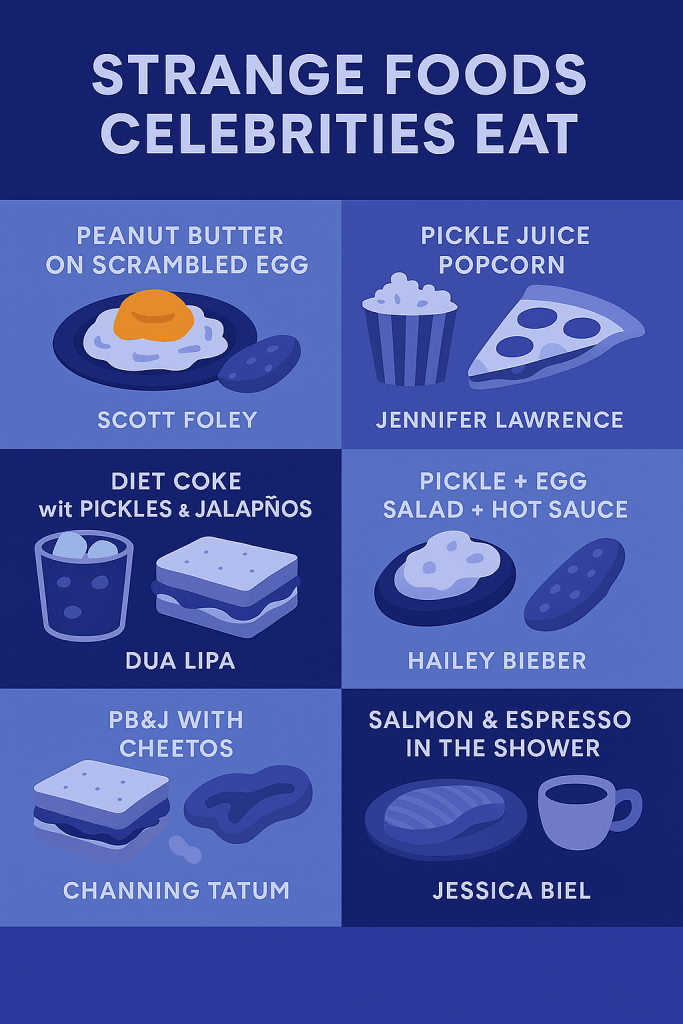
  • Sources: Scott Foley * Jennifer Lawrence * Duo Lipa *
    Hailey Bieber * Channing Tatum * Jessica Biel

    More Strange Foods Celebrities Enjoy

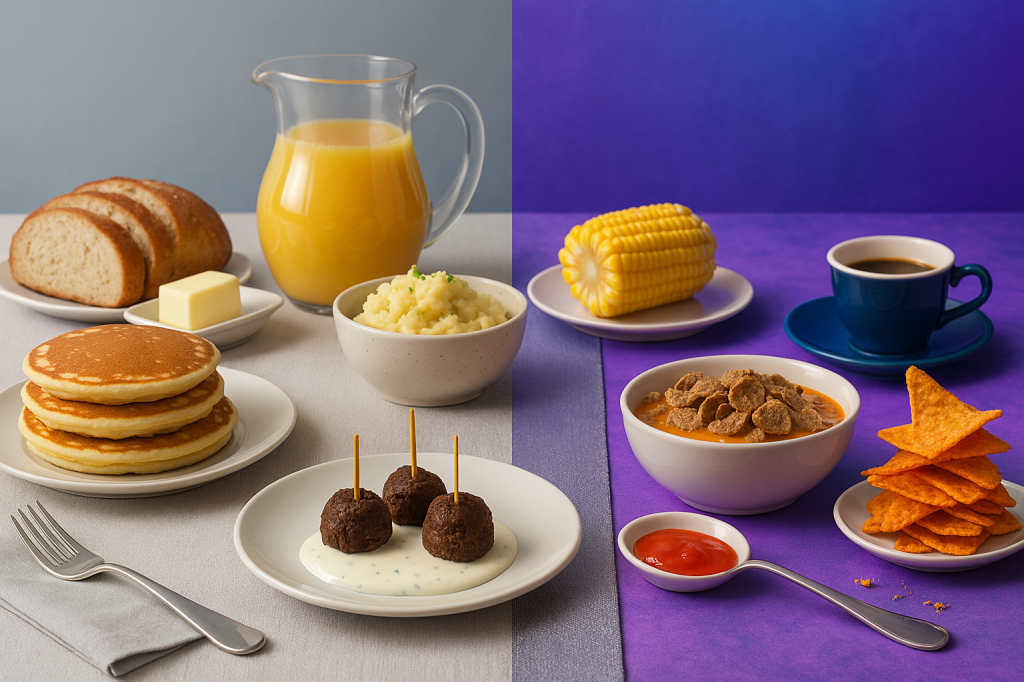
    From silver-plated brownies in ranch to cereal soaked in orange juice, these chaotic celeb cravings prove glamour and weird go hand in hand.
    Celebrity NameBizarre Food FavoriteSource
    Chrissy TeigenLicks the Dorito powder off chips and discards the rest.As shared in BuzzFeed’s viral food list, Chrissy’s habit adds new meaning to “bold flavor.”
    Michael BubléEats corn on the cob in circular bites, sparking viral confusion.According to People.com’s roundup, fans were more stunned by his technique than the food itself.
    Kourtney KardashianDissects Kit Kats layer by layer—peeling chocolate and nibbling precisely.Featured in Mashed.com’s list, Kourtney even taught fans her meticulous method.
    Dove CameronRolls brownies into balls and dips them in ranch dressing.Cited via Us Weekly’s photo feature, it’s a mix of dessert and dressing that defies logic.
    Bella RamseySwaps milk with orange juice in her breakfast cereal.Highlighted in BuzzFeed’s weird celebrity food round-up, it’s a citrusy breakfast rebellion.

    Would You Try It❓

    Which bizarre celebrity food would you dare to taste?

    🧁 Brownie balls dipped in ranch dressing (Dove Cameron)

    🌽 Circular corn cob bites (Michael Bublé)

    🍊 Cereal with orange juice (Bella Ramsey)

    🍫 Licking Dorito powder only (Chrissy Teigen)

    🍫 Kit Kat dissection method (Kourtney Kardashian)

    Ready to raid the fridge like the rich and chaotic? 🍽️Sound off in the comments with your pick or your own celebrity-worthy food confession. 🍽️

    ~ * ~ Stay tuned, stay savage, stay sparkly — Holly out. ~ * ~

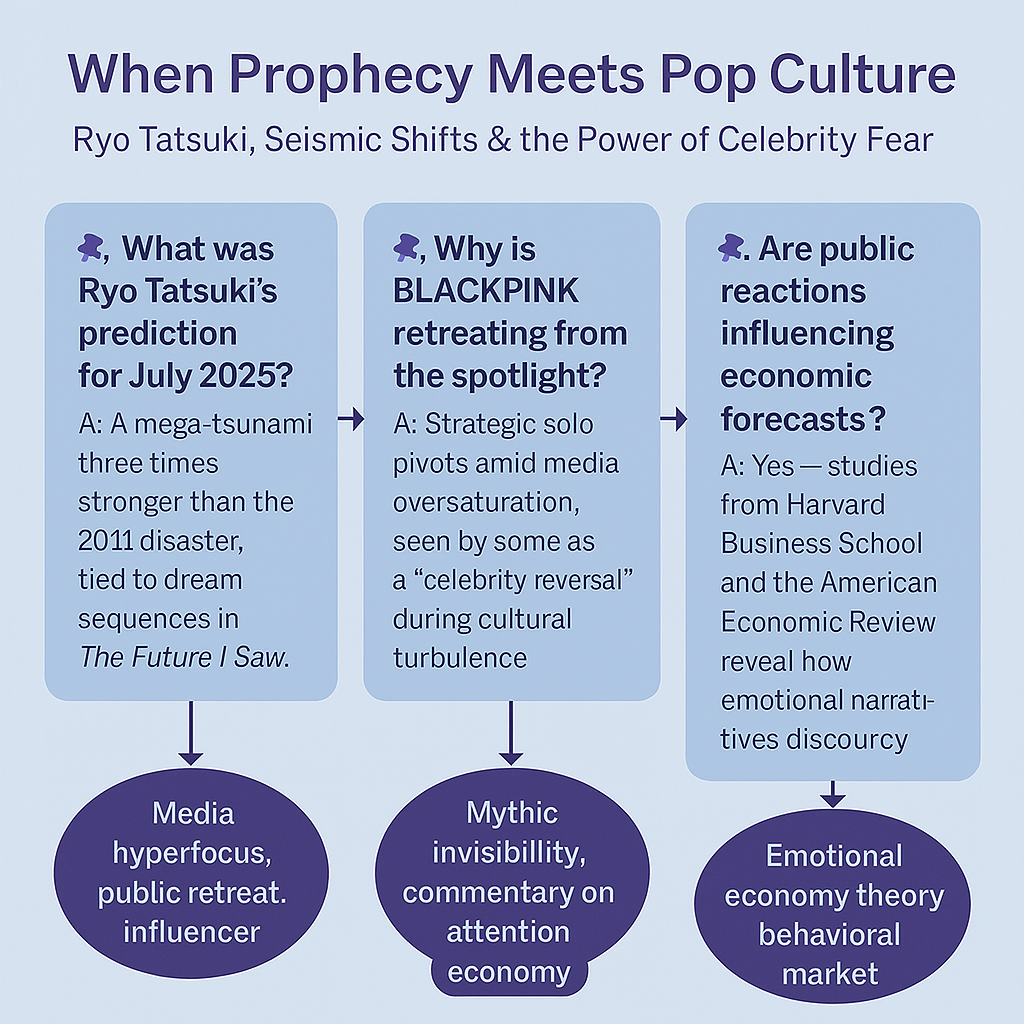
  • When Prophecy Becomes Pop Currency: Ryo Tatsuki’s July 5 tsunami dream collides with BLACKPINK’s silent retreat, triggering a cultural quake across social media, celebrity strategy, and viral belief systems.

    Ryo Tatsuki’s Seismic Grip on Culture and Celebrity Fear

    In July 2025, Japan’s seismic anxiety hit a fever pitch, not due solely to tectonic plates—but to the prophetic sketches of manga artist Ryo Tatsuki. Her work The Future I Saw predicted a tsunami surpassing the devastation of the 2011 Tōhoku disaster, mapped eerily to this very summer. As outlined by Firstpost, Tatsuki’s warning resurfaced just as volcanic alerts in Kyushu and the Tokara Islands intensified, leaving both citizens and celebrities scrambling.

    From Manga to Media Frenzy

    Tatsuki’s prophecy didn’t stay buried in cult fandom. As volcanic tremors shook Japan, Newsweek reported mass cancellations across coastal tourism sectors, fueled by renewed public fear. Even Nation Thailand echoed the unease, noting over 1,000 earthquakes in under 30 days near Tokara—seismic activity that seemed ripped from her illustrated dreams.

    Meanwhile, her legacy on social platforms exploded. TikTok users racked up millions of views dissecting her timeline, fueling speculation about celebrity panic bunkers and delayed A-list vacations. The story’s momentum, as covered by Indulge Express, proved what manga fans knew all along—Tatsuki’s visions don’t just captivate, they agitate.

    Fear, Forecast Bias & the Celebrity Economy

    Prophecy panic sounds theatrical, but it’s altering economic behavior. Anna Scherbina, a Harvard researcher now at Brandeis University, studied how emotional triggers affect financial judgment. Her forecast bias paper reveals that analysts lean optimistic in uncertain times, skewing models when public sentiment shifts wildly.

    Even broader, a team led by Pedro Bordalo and Andrei Shleifer published a compelling case in the American Economic Review, showing how macroeconomic forecasts systematically overreact to salient news, and underreact to slow burns. Their “diagnostic expectations” model applies chillingly well here: pop culture panic becomes a financial input, especially when celebrity behavior appears reactive.

    Myth, Media & Modern Influence

    Ryo Tatsuki’s prophecy doesn’t live in the past; it’s shaping the now. Her predictions offer more than fear. They’ve sparked a cultural shift in how people read symbols, react to dreams, and remix fiction into social truth. This isn’t just manga; it’s myth-making at scale. And whether or not the tsunami arrives, her influence already has.

    From panic hashtags to coastal exit plans, from influencer countdowns to public policy stirrings: Tatsuki’s vision proves that today’s most powerful predictor isn’t AI, stock traders, or meteorologists. It’s story. It’s timing. It’s belief.

    While Ryo Tatsuki’s prophecy rippled across news feeds and fandoms, another cultural withdrawal quietly reshaped the celebrity landscape. BLACKPINK, long synonymous with global omnipresence, has shifted into quiet pause. As Rolling Stone details, their solo pivots and absence from major festivals signal a strategic slowdown.

    Jennie’s minimalist fashion campaigns, Rosé’s analog recording sessions, and Lisa’s soft-power brand appearances suggest a deliberate shift away from spectacle and toward autonomy. This retreat aligns with what media critics call “celebrity reversal,” a quiet recalibration designed to preserve mystique when the cultural climate feels volatile.

    Predictions That Sparked Public Overreaction

    PredictionYearPublic ReactionOutcomeSource
    Y2K Bug1999Mass panic over global tech failure; stockpiling and emergency prep surgedMinimal disruption; most systems patched in timeSmithsonian Magazine
    Mayan Calendar “End of World”2012Global doomsday hysteria; survivalist sales spikedNo catastrophe; misinterpretation of calendar cycleHistory.com
    Freddie Mercury’s Death Prediction by Ryo Tatsuki1991Fans later linked her dream journal to his passingCoincidental timing; no prior public warningWION
    COVID-19 Prophecy Claims2020Viral posts claimed various psychics foresaw the pandemicNo verified pre-2020 predictions; mostly retroactiveVice
    Ryo Tatsuki’s July 2025 Tsunami Warning2024–2025TikTok and Twitter flooded with seismic maps and manga overlaysNo tsunami (as of July 11); ongoing speculationNewsweek
    Economic Forecast OverreactionsVariousInvestors overreacted to macro predictions, causing market volatilityOften corrected post-event; driven by psychological biasAmerican Economic Review

    📌Summary: Reading the Ripple Effect📌

    From manga-born prophecy to celebrity withdrawal, the threads of July 2025 weave a cultural narrative more electrifying than the news cycle itself. Ryo Tatsuki’s dream journal has shifted from niche folklore to viral gospel, pushing seismic speculation into mainstream discourse. Meanwhile, BLACKPINK’s strategic silence mirrors the media’s emotional volatility, reminding us that influence is as much about timing as it is visibility.

    BLACKPINK didn’t vanish; they recalibrated. Ryo Tatsuki didn’t warn; she rewired belief. Together, these cultural shifts reveal a new fame algorithm powered by silence, symbolism, and seismic anticipation. #Blackpink #RyoTatsuki #TsunamiOfSymbolism

    The result? A digital landscape where prophecy shapes planning, panic drives prediction, and even absence speaks louder than words. This isn’t just pop culture responding to chaos. It’s becoming the lens through which chaos is interpreted.

    Final Thought: When Fear Goes Viral

    Whether July 12 delivers on its predicted impact, its cultural resonance is already seismic. Ryo Tatsuki’s dream diaries have resurfaced as multimedia myth — not simply forecasting nature’s fury, but reframing how collective anxiety propagates across screens. Her warnings, once confined to illustrated pages, now dictate travel habits, influencer discourse, and public mood.

    Meanwhile, BLACKPINK’s quiet fade from group visibility offers a parallel prophecy: a celebrity refusal to feed the algorithm during peak cultural volatility. Their recalibration isn’t retreat; it’s rhythm, proof that even the most followed figures know when to step back before the swell. It’s the silence between the beats that tells the deeper story.

    In moments like these, pop culture becomes the lens we use to measure belief, risk, and reaction. Prophecy doesn’t need to prove itself in earthquakes — it already shapes how we behave. And if silence signals anything, it’s that attention isn’t always a currency worth spending.

    Stay tuned: as reactions evolve and the narrative deepens, Hot & Not in Hollywood will continue tracking the fault lines (both literal and cultural) where fear becomes content, and content becomes legacy.

    ~ * ~ Stay tuned, stay savage, stay sparkly — Holly out. ~ * ~

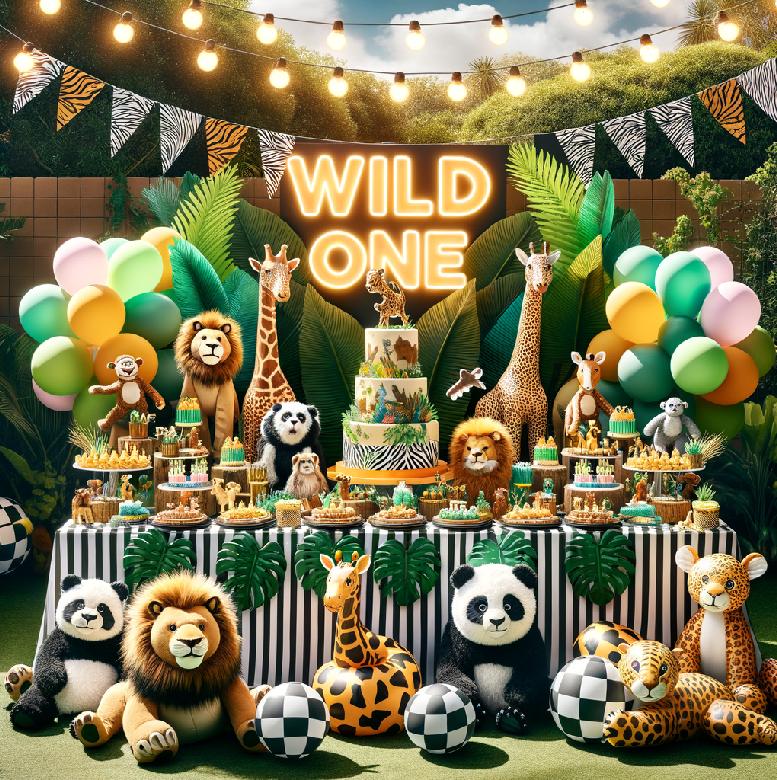
  • Zoo-themed grandeur met influencer theatrics at Moo Deng’s viral birthday bash, where animal-print decor, safari cake motifs, and digital spectacle collided to spark a culture-reset moment in celebrity persona politics.

    When the cake cleared, the ripple effect had only just begun.

    From curated celebrity personas to influencer culture and viral spectacle, Moo Deng’s birthday bash isn’t just trending; it’s redefining what power looks like in entertainment…

    Hollywood Has Competition… and It’s Covered in Mud

    While celebrities scramble for engagement, one Thai pygmy hippo named Moo Deng has quietly amassed a loyal fanbase that now rivals Hollywood’s best. His first birthday celebration—hosted at Khao Kheow Open Zoo—was a spectacle so viral, it’s forcing digital culture analysts to rethink what celebrity even means in 2025.

    As reported by Thai PBS, Moo Deng’s party attracted thousands, featured multi-day events, and spawned hundreds of TikTok tributes. His fanbase isn’t just engaged; it’s obsessed.

    Moo Deng’s birthday bash didn’t just trend; it redefined celebrity power dynamics. From viral spectacle to culture reset, this party broke the internet and reshaped influencer hierarchies. #ViralMoment #InfluencerCulture #MooDeng #CelebrityPower

    Moo Deng’s Birthday Bash: Beyond Cute, Into Iconic

    The four-day celebration was no ordinary zoo event. Visitors arrived in hippo-themed outfits, brought plushies, and cheered as Moo Deng waddled into a birthday pool surrounded by pink and gold balloons.

    • According to Channel 3 Thailand, highlights included:

    • A custom float shaped like a crown

    • Influencer-style live streams documenting every nap and snack

    • Moo Deng-branded merch selling out within hours

    Photos of the bash show a hippo so pampered, even the Kardashians might blush.

    Moo Deng challenged celebrity hierarchies and spotlighted the influencer spectacle machine. As curated personas crack, authenticity is finally breaking through the noise. #Viral #HotAndNot #MooDengEffect

    Engagement Wars: Moo Deng vs. Hollywood

    To quantify Moo Deng’s digital impact, we compared his birthday engagement with recent celebrity social media stats. Spoiler: the numbers are staggering.

    NameAvg Likes per PostTikTok TributesLivestream Views
    Moo Deng (July 2025)85,000+430+1.3 million+
    Zendaya70,0003501 million
    Timothée Chalamet62,000310900,000

    SFGATE even called Moo Deng “the most beloved zoo animal on the planet”—a title not even Instagram’s top dogs can claim.

    Fan Culture & Meme Economy: Moo Deng’s Power Explained

    What makes Moo Deng so irresistible? It’s more than cuteness. His rise encapsulates what the meme economy values now: authenticity, unpredictability, and pure serotonin appeal.


    A Star Is Born in the Mud: Why Moo Deng Matters

    Moo Deng’s fame isn’t a novelty. It reflects a growing shift toward alternative icons in online culture. As celebrity culture becomes increasingly manufactured, fans gravitate toward genuine emotional anchors.

    This emerging phenomenon (often described as Zoomorphic Stardom) spotlights how animals such as Moo Deng are embraced as digital icons, offering emotional resonance and lighthearted escapism. Unlike traditional celebrities, they captivate audiences without the entanglements of scandal, curated personas, or branding fatigue. As explored in Zoomorphism: Blending Animal Traits in Myth, Literature, and Art, the cultural fascination with animal symbolism has long shaped storytelling, and now it’s reshaping the celebrity landscape.

    Final Thoughts: When Hippos Eclipse Hollywood

    In a digital world where engagement is currency, Moo Deng has earned his throne without PR teams, record deals, or tabloid drama. His viral birthday party proves that charisma isn’t limited to red carpets; it can rise from a sunlit pool in a Thai zoo.

    If Hollywood isn’t watching, it should be. This hippo isn’t just adorable. He’s redefining fame one mud puddle at a time.

    ~ * ~ Stay tuned, stay savage, stay sparkly — Holly out. ~ * ~

  • Clout-chasing meets consequence: from staged brawls to flashy breakdowns, this post uncovers how viral stunts in hip-hop blur the line between fame and fallout.

    Rapper 4xtra’s fireworks injury exposes hip-hop’s obsession with clout-driven stunts. Here’s why dangerous antics are becoming the norm — and why fans might finally be over it.

    The hip-hop industry has always danced with danger, whether it’s lyrical beef, fashion that breaks rules, or living loud in the face of adversity. But in 2025, clout-chasing has become less about authentic artistry and more about risk-fueled spectacle. Case in point: underground rapper 4xtra, who made headlines after a July 4th stunt went catastrophically wrong, resulting in the loss of two fingers during a fireworks incident he had jokingly teased online.

    The symbolic aftermath of a hip-hop stunt gone wrong ripples far beyond the viral moment. It exposes the growing tension between fame-chasing spectacle, reckless risk-taking, and the demand for authenticity in today’s hyper-competitive digital landscape.

    What began as a seemingly harmless video (“I’m ‘bout to blow someone up!”) turned into an IRL tragedy, stirring a wave of discourse about the desperation for viral fame within hip-hop’s digital subculture. And while 4xtra may not be a household name, his mishap ignited tabloid and fan coverage across platforms like The Source and Hypebeast, pushing questions about the cost of clout into mainstream conversation.

    Clout, Carnage, and Content Strategy

    These days, hip-hop artists are expected to be more than rappers; they’re content creators, stunt choreographers, and algorithm whisperers. The pressure to maintain engagement has shifted the game from bars to bait. From rooftop freestyles dangling over city skylines to fake shootouts and prank violence on TikTok, the formula is clear: bigger risk, bigger reach.

    According to Vulture journalist Jasmine Velez, this “spectacle-over-substance” trend reflects how Gen Z’s digital appetite is reshaping not just music consumption, but artist identity itself. What was once the realm of lyrics and mixtapes is now flooded with reels designed to shock, not speak.

    Psychology of Spectacle: Why Danger = Clicks

    The psychology is simple but sinister: high-risk behaviors activate viewer adrenaline, triggering emotional reactions that drive shares and comments. It’s the same science behind reality TV and clickbait titles. But when applied to artists with real bodies and real lives, the stakes become terrifyingly tangible.

    Artists like 4xtra aren’t just gambling with firecrackers — they’re trading long-term credibility for fleeting virality. As Complex notes, what’s getting lost is the storytelling, the soul, and the self-preservation that once anchored hip-hop culture.

    Final Word: Real vs. Reel

    If the tragedy teaches us anything, it’s that there’s growing fatigue around risk-as-entertainment. Gen Z and Millennial audiences are beginning to crave authenticity over audacity. They prefer artists who show vulnerability, intention, and creativity without endangering themselves for viral hype.

    For rapper 4xtra, this moment could become a cautionary tale about clout culture and the cost of shock-driven fame. If he reclaims the narrative, it may mark a powerful pivot from spectacle to substance, redefining his role in the hip-hop industry. For the culture at large, it’s a wake-up call that viral stunts are reaching a dangerous tipping point.

    If 4xtra’s story rattled you, dive deeper into the chaotic world of clout culture by revisiting Lil Tay’s social media disappearance and the staged gun prank that nearly derailed rapper NLE Choppa’s career. These incidents echo a chilling truth: when digital spectacle outweighs creative substance, the consequences are often irreversible. Join the conversation and explore why audiences are starting to reject reckless virality in favor of authenticity.

    ~ * ~ Stay tuned, stay savage, stay sparkly — Holly out. ~ * ~